
Choosing between a weld neck flange and a slip-on flange is one of the first decisions on a piping job. Both are widely available and both sit inside the same family of dimensional standards, yet they behave differently in service. The difference shows up in welding cost, inspection effort, fatigue life, and how easily the joint can be assembled in the field. This guide explains each type, compares them on the points buyers care about, and lists what to include on an inquiry.
One principle applies throughout: the flange type alone does not decide whether a joint is acceptable. Pressure, temperature, loading, material, and the governing design code decide that, and the final selection should be confirmed by the project specification and a qualified engineer.
What Is a Weld Neck Flange
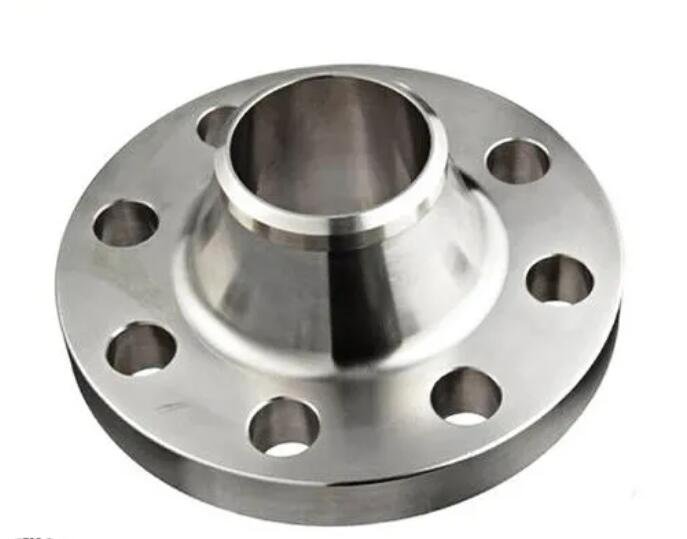
A weld neck flange has a long, tapered hub, the neck, that transitions gradually from the flange ring down to the pipe wall. The pipe is butt-welded to the end of the neck, and the flange bore is machined to match the pipe bore, so the inside of the joint stays smooth and continuous.
The tapered hub is the key feature. Because the wall thickness changes gradually instead of abruptly, stress where the flange meets the pipe is spread over a longer section. Combined with a full-penetration butt weld, this generally gives the joint better resistance to fatigue and to the bending and thermal stresses that piping meets in service.
In practice, weld neck flanges are the usual choice where a joint must endure demanding conditions: lines that cycle in pressure or temperature, connections to vibrating equipment, larger bores, and services where a smooth bore or thorough weld inspection matters. The trade-offs are higher material cost, more careful fit-up, a beveled pipe end, a qualified welder, and normally some non-destructive examination. Browse our weld neck flange range for the sizes and faces we produce.
What Is a Slip-On Flange
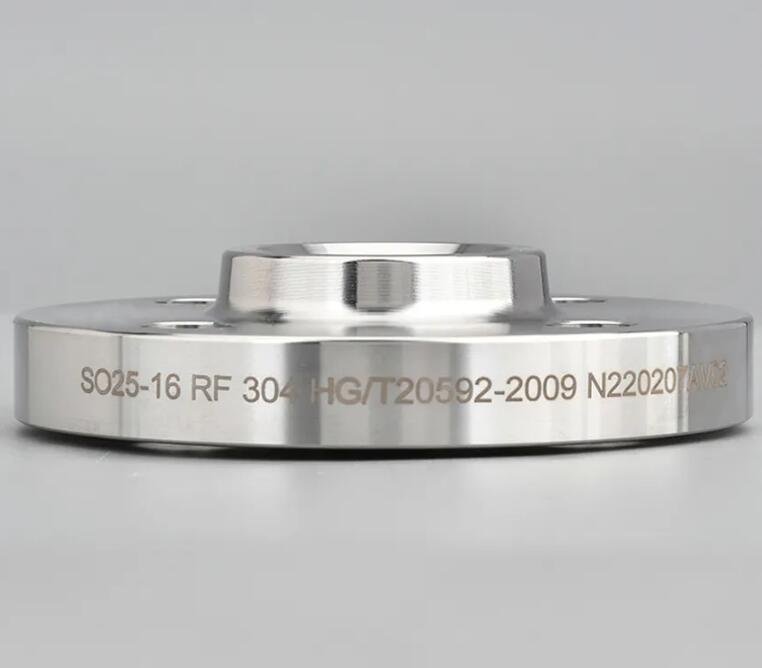
A slip-on flange has a plain bore slightly larger than the pipe outside diameter. The pipe slides through the flange until it sits flush with the face, and the joint is closed with fillet welds, typically one outside the hub and one inside.
Because there is no beveling and no need to match the pipe bore end-to-end, slip-on flanges are quick to fit and easy to align. The flange can be rotated to line up bolt holes before welding, and field adjustments are simpler. Material and fabrication cost is usually lower than for a weld neck of the same size and class.
The trade-off is mechanical. A fillet weld does not penetrate the full wall, and the small gap between pipe and flange bore creates a stress concentration and a crevice. Under repeated or cyclic loading this generally gives lower fatigue resistance than a butt-welded neck. Slip-on flanges are therefore common in lower-pressure and lower-temperature services, utility and water lines, small bores, and low-cyclic duty, but whether one is acceptable for a given line is still decided by the design conditions and the code. See our slip-on flange range for available options.
Weld Neck vs Slip-On: At-a-Glance Comparison
| Decision point | Weld neck flange | Slip-on flange |
|---|---|---|
| Connection to pipe | Pipe is butt-welded to the tapered neck; the flange bore matches the pipe bore. | Pipe passes through the flange bore and is fillet-welded in place. |
| Welding | Full-penetration butt weld; the pipe end must be beveled. | Fillet weld, often inside and outside; no beveling required. |
| Alignment and fit-up | Needs an accurate cut, bevel and alignment; less forgiving. | Easy to slide into position and rotate to line up bolt holes. |
| Stress handling | Tapered hub spreads stress; generally better fatigue performance. | Fillet welds and a crevice create stress concentration; lower fatigue resistance. |
| Common selection context | Often chosen for cyclic or vibrating service, larger bores and critical lines. | Often chosen for lower-pressure, low-cyclic, utility and smaller lines. |
| What the buyer must specify | Size (NPS or DN), pressure class, facing, material grade and specification, pipe schedule and bore, applicable standard, quantity, inspection and certification requirements, marking, and packaging. | |
How to Choose a Weld Neck or Slip-On Flange
Design pressure and temperature
Start from the rated pressure-temperature basis rather than a single pressure number. ASME B16.5-2025, which covers pipe flanges and flanged fittings from NPS 1/2 through NPS 24, defines pressure-temperature ratings by material group and class, along with dimensions, tolerances, marking, and testing. A Class is not a fixed psi value: the allowable pressure behind a given class changes with the material and the design temperature. Confirm the rating that applies to your material and temperature before comparing types.
Cyclic and vibration loading
If the line sees pressure cycling, thermal cycling, or mechanical vibration, fatigue often becomes the controlling question. The butt weld and tapered hub of a weld neck flange generally handle this better, while the fillet welds and crevice of a slip-on flange are less tolerant of repeated loading. Where cyclic service is expected, this is frequently the deciding factor.
Pipe schedule and bore matching
Both types are sized to the pipe outside diameter, but the details differ. A slip-on flange has a bore slightly larger than the pipe so the pipe can pass through. A weld neck flange has a bore that should match the pipe bore, so a change of wall thickness must be reflected in the flange order. State the pipe schedule and required bore on the inquiry, and confirm the flange bore matches the pipe you are installing.
Material and corrosion
Select the flange material for the fluid, the external environment, the design temperature, and compatibility with the pipe material. In aggressive services, remember that the crevice between a pipe and a slip-on flange bore is a potential corrosion site. Grade, specification, and any corrosion allowance should appear explicitly on the purchase order.
Installation and fabrication
Consider who is doing the work and how. Slip-on flanges are faster to fit, easier to align, and can be rotated before welding. Weld neck flanges need an accurate cut and bevel, careful alignment, full-penetration welding, and usually non-destructive examination. Where welder skill or inspection access is limited, that difference can outweigh the material cost saving.
Applicable standard and project specification
Confirm which standard governs the flange, for example ASME B16.5 for dimensions and ratings, and which construction code governs the piping system. Owner specifications, project datasheets, and local regulations may add requirements such as impact testing, hardness limits, or specific marking. When a specification and a rule of thumb disagree, the specification wins.
Weld Neck and Slip-On Flange Inquiry Checklist
To receive an accurate quotation the first time, include the following in your request:
- Project, delivery location, and application or line number
- Flange type: weld neck or slip-on
- Size (NPS or DN) and pressure class
- Facing: raised face, flat face, or ring joint, and the mating face
- Material grade and specification, plus any corrosion allowance
- Pipe schedule, wall thickness, and required bore
- Applicable standard for dimensions and ratings
- Quantity, including spares
- Inspection, testing, and documentation: NDT, PMI, hydrostatic test, material certificates, marking
- Surface finish, coating, packaging, delivery date, and shipping terms
Frequently Asked Questions
Is a weld neck flange stronger than a slip-on flange?
In fatigue terms the weld neck usually performs better, because the full-penetration butt weld and tapered hub reduce stress concentration. That does not mean every weld neck joint outperforms every slip-on joint; overall performance depends on wall thickness, welding quality, the design conditions, and the governing code.
Can a slip-on flange be used in high-pressure service?
Pressure class and service conditions decide that, not the flange type on its own. Slip-on flanges are made across the standard classes and are used in demanding systems, but whether one suits your line is a design decision to confirm against the applicable code and with a qualified engineer.
Do the two types share a bolt pattern?
For the same size, pressure class, and standard, the bolt circle, the number and size of bolt holes, and the facing dimensions are standardized, so the two types generally bolt together and take the same gasket. Verify against the specific standard edition and the mating flange in your assembly.
Which type costs less?
A slip-on flange usually costs less in material and fabrication: no beveling, a simpler fillet weld, and faster fit-up. Installed cost can close the gap once inspection, non-destructive examination, and possible rework are counted.
What is the difference between Class 150 and Class 300?
They are pressure-temperature rating classes, not fixed pressure values. The allowable working pressure behind each class depends on the flange material group and the design temperature, as defined in the applicable standard. Two flanges of the same class can have different allowable pressures at different temperatures.
What is the most important thing to specify when ordering?
Size and pressure class, facing type, and material are the essentials, but a complete inquiry also includes the pipe schedule and bore, the standard, quantity, inspection and certification requirements, marking, and packaging.
Conclusion
Weld neck and slip-on flanges solve the same problem in different ways. Weld neck flanges invest more material and welding effort to deliver a smooth bore and better fatigue performance; slip-on flanges trade some of that for lower cost, easier alignment, and faster installation. Neither is universally correct, and neither is tied to a fixed pressure limit by its type alone.
Choose by working through the design pressure and temperature basis, the loading the line will see, the pipe schedule and bore, the material and corrosion environment, and the practical realities of fabrication and inspection. Then confirm the decision with a qualified engineer.
Need a quotation? Send the specifications from the checklist above through our contact page and our team will help match the right flange type, class, and material to your project.
Reference
ASME. B16.5 – Pipe Flanges and Flanged Fittings: NPS 1/2 – NPS 24 Metric/Inch Standard. Official standard page, accessed 2026.